Fake Traffic Challan SMS Scam: How to Stay Alert and Protect Your Money
 Sunday March 1, 2026
 Sunday March 1, 2026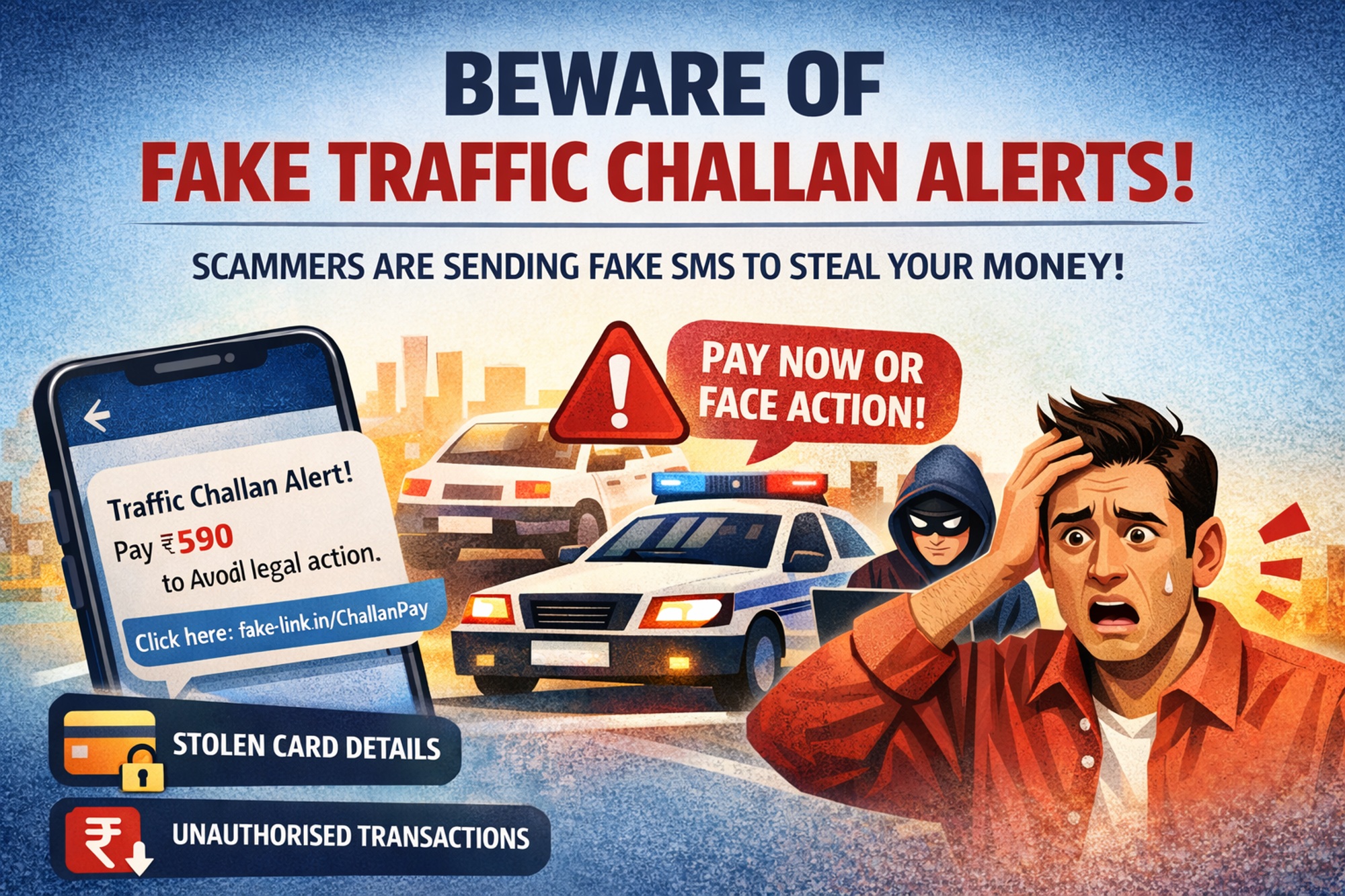
Digital payments have made our lives easier. Unfortunately, they have also made it easier for fraudsters to exploit fear and urgency.
One of the latest and rapidly spreading cyber fraud techniques involves fake traffic challan SMS alerts. These messages appear legitimate, create panic, and trick unsuspecting individuals into making fraudulent payments.
This article provides a detailed breakdown of how the scam works, why it is effective, and most importantly, how you can protect yourself.
How the Fake Traffic Challan Scam Works
Fraudsters send SMS messages claiming:
- A traffic challan is pending against your vehicle
- Immediate payment is required
- Legal action or vehicle seizure will occur if not paid
- Your driving licence may be suspended
The message often includes a link and a small payable amount (for example, ₹590) to make it look realistic and harmless.
Once you click the link:
- You are redirected to a fake website that appears to be an official government portal.
- You are prompted to enter vehicle details.
- A small challan amount appears (e.g., ₹590).
- You enter your card details and OTP.
- Instead of ₹590, a much larger amount is debited from your account.
In some cases, clicking the link may also install malware on your device.
Why This Scam Is So Effective
Fraudsters exploit three psychological triggers:
- Fear – Legal action and licence suspension threats
- Urgency – “Pay immediately to avoid penalty”
- Trust – A small payable amount that looks believable
The combination creates panic and reduces rational decision-making.
Risks of Clicking Fraudulent Challan Links
Clicking or transacting through these fake links can result in:
- Theft of personal and card details
- Unauthorised debit transactions
- Installation of spyware or malware
- Identity theft
- Compromised banking credentials
The financial loss may extend beyond a single transaction if credentials are captured.
Where Legitimate Traffic Challans Are Issued
Authentic traffic challans are issued only through authorised government platforms such as:
- Ministry of Road Transport and Highways
- Parivahan Sewa
- E-Challan – Digital Traffic/Transport Enforcement Solution
You can verify genuine challans through the official Parivahan portal: https://echallan.parivahan.gov.in
Legitimate communication will not pressure you with threatening language or shortened links.
How to Protect Yourself from Fake Traffic Challan Scams
Follow these safety measures strictly:
1️⃣ Do NOT Click Suspicious Links
Avoid clicking on links received via SMS that claim pending challans.
2️⃣ Do NOT Panic
Scammers rely on urgency. Take a pause before taking any action.
3️⃣ Verify Through Official Websites Only
Manually visit official government portals to check challan status.
4️⃣ Never Share Sensitive Information
Do NOT share:
- Card number
- CVV
- OTP
- Net banking credentials
- Personal identification details
No legitimate authority will ask for an OTP via SMS or phone call.
5️⃣ Avoid Shortened or Unknown URLs
Fraudulent messages often use shortened links to disguise malicious websites.
What To Do If You Become a Victim
Immediate action increases the chance of recovery.
- Call the Cyber Crime Helpline: 1930
- Report the incident on the official portal of the National Cyber Crime Reporting Portal – https://cybercrime.gov.in
- You can also report suspicious communication to: Sanchar Saathi – https://sancharsaathi.gov.in
Prompt reporting can help authorities block fraudulent accounts and trace cyber criminals.
Red Flags to Watch For
Be cautious if the SMS contains:
- Threatening or alarming language
- Urgent deadlines
- Small but immediate payment demands
- Unknown or shortened URLs
- Generic sender IDs
Government agencies do not intimidate citizens through SMS.
Best Cyber Hygiene Practices
To reduce your exposure to such scams:
- Keep your device software updated
- Use trusted antivirus protection
- Enable SMS filtering
- Monitor bank statements regularly
- Activate transaction alerts
- Avoid entering card details on unknown websites
Final Reminder
Always remember:
✔️ Do NOT click on links received from unknown sources
✔️ Do NOT share confidential or sensitive information
✔️ Verify before you trust
✔️ Report immediately if scammed
Cyber fraud thrives on haste and fear. Awareness is your strongest defence.
Stay informed. Stay alert. Protect yourself and your loved ones.